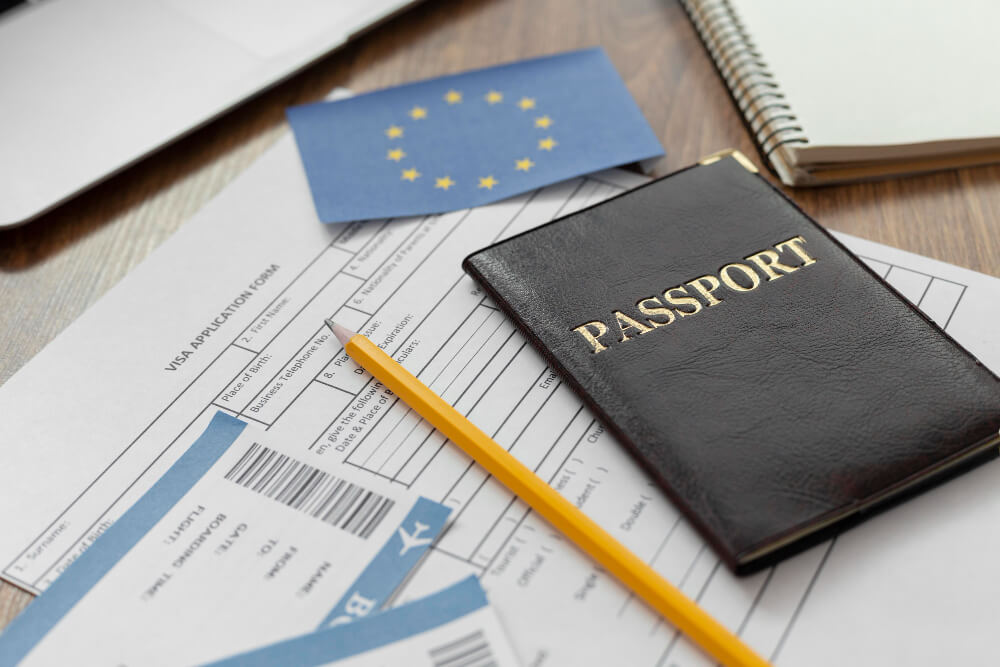
The Entry Exit System (EES) is the European Union’s digital border register for non-EU nationals travelling for a short stay. It replaced passport stamping at the Schengen external borders and became fully operational on 10 April 2026. If you spend time in Spain without being a resident, it changes how your days are recorded and what happens at passport control. This guide explains who is affected, what data is collected and how the system fits into your plans.
At Lextax Consulting, a legal and tax firm based in Xàbia (Alicante), we advise non-residents on immigration procedures in Spain, including the residence routes for anyone who wants to stay longer than a short visit. Contact us through to discuss your situation and find out how we can assist you.
What the Entry Exit System is
The EES is an automated EU database. It records the entry, exit and any refusal of entry of non-EU nationals who cross the external borders of the Schengen area for a short stay, replacing the manual stamping of passports. The system launched on 12 October 2025 and became fully operational on 10 April 2026, when all 29 participating countries had deployed it at their external borders. Spain is one of them. Because checks take place at external borders, movements between Spain and other Schengen countries are not checked under the system.
Who the EES applies to
The EES covers non-EU nationals travelling for a short stay of up to 90 days within any 180-day period. The rule applies whether or not you need a visa. The official Travel to Europe website confirms that the 90 days are counted as one single period for all EES countries, so days spent in Spain add up with days spent in France, Portugal or Italy.
How the 90/180-day rule works now
The rule itself has not changed. What is new is that entry and exit dates are stored electronically, so the length of a stay can be monitored without counting passport stamps. Keep your own record of travel dates, especially if you split your time between Spain and other European countries, and check your position on the official site before booking a longer trip.
Who is exempt
Non-EU nationals who hold a residence card or residence permit are not covered by the system. Neither are certain immediate relatives of non-EU nationals who can travel through Europe like EU citizens. EU citizens fall outside the EES as well. Exemptions can change, so confirm your position on the official site before relying on one.
What data is collected at the border
The system stores the details printed in your travel document, including your full name, date of birth, nationality and sex. It also records the date and place of each entry and exit, any refusal of entry, and biometric data: a facial image and, in most cases, fingerprints.
Fingerprints depend on your visa status
If you need a Schengen visa, your fingerprints were already taken when you applied, so the system stores only your facial image. If you do not need a visa, the system stores four fingerprints and your facial image. At present, the fingerprints of children under 12 are not scanned, even when the system applies to them.
What changes at passport control
At your first registered entry, a border officer checks your documents, may ask questions and records your entry digitally. On later journeys, your facial image and fingerprints are verified rather than captured again. Exits are recorded in the same way, so there is no passport stamp to show that you have left Spain.
You can also pre-register through the official Travel to Europe app before you arrive. Pre-registration is designed to speed up the process at the border, but the border check still takes place.

What this means if you plan to live or work in Spain
For many non-residents, the EES makes the limit visible. Several tourist stays can add up quickly, and each one is recorded. Staying beyond the short-stay allowance requires a residence permit or a long-stay visa, and once you hold a residence permit you fall outside the system’s count. The right route depends on your nationality, income, work situation and the time you plan to spend in Spain. Options such as the non-lucrative visa for British citizens or the digital nomad visa each carry their own requirements, so it is worth reviewing them before you book your next trip.
We review these situations during a free initial consultation, looking at your nationality, travel history and plans before recommending a route.
Frequently asked questions
Is the EES the same as ETIAS?
No. The EES records entries and exits of non-EU nationals already travelling to the Schengen area. ETIAS is a separate travel authorisation planned for visa-exempt travellers. Check the official Travel to Europe website for its current start date, as the timetable has moved before.
Do movements between Spain and other Schengen countries count?
They are not checked under the EES, because the system operates at external borders. Those days still count towards your 90-day limit, however, because the 90/180 period is calculated across all EES countries together.
What happens if I overstay?
The system records your dates electronically, so an overstay can be detected at a later entry. Leaving and coming back does not give you a fresh 90 days, because the limit applies to any 180-day period. If you have already exceeded the limit, or think you might have, speak with Lextax before your next trip. We will review your travel history, explain which residence route could fit your situation and set out your options. You can contact our team at any time to start that conversation.